Artificial intelligence continues to attract staggering amounts of capital. Massive funding rounds, rising valuations, and intense competition among foundation model providers dominate headlines.
AI is quietly shifting from a technology people are talking about into one people are relying on.
Nowhere is that support more needed or visible than in healthcare.
Capital Is Still Pouring In, but That’s Not the Whole Story
Capital is still flowing aggressively into AI, especially toward companies building foundational models, infrastructure, and the platforms that support them.
Anthropic is reportedly raising $10B at a $350B valuation, xAI has closed a $20B round, and even supporting layers of the ecosystem like model evaluation and benchmarking are now attracting nine-figure investments.
These reflect long-term conviction that AI will continue to reshape entire industries, even as short-term market narratives fluctuate.
This level of funding supports compute, research, and distribution at a scale that allows AI systems to move beyond demos and into real-world environments.
At the same time, markets are becoming more discerning. Valuations alone are no longer enough.
Where does this technology actually create value?
AI Is Already a Daily Health Tool for Millions
Recent data shows that healthcare is one of the most common reasons people turn to AI tools today.
According to a recent OpenAI report, more than 40 million people around the world use ChatGPT every day for health-related questions, and over 5 % of all ChatGPT messages globally are about healthcare.
Millions of users are asking about symptoms, medical terminology, insurance questions, and treatment options.
Many of these conversations happen outside normal clinic hours, filling gaps that the healthcare system has struggled with for years.
This is not simply speculative usage, it’s also practical and often urgent.
People are using AI to prepare for doctor visits, understand test results, navigate insurance, and make sense of complex medical information.
For underserved and rural communities, this access matters even more.
Of course AI cannot replace hospitals or clinicians, but it can help people interpret information, prepare for care, and make better decisions when resources are limited.
From Information to Integrated Health Context
What’s especially meaningful is that AI is moving beyond one-off answers and more toward a more connected view of a person’s health.
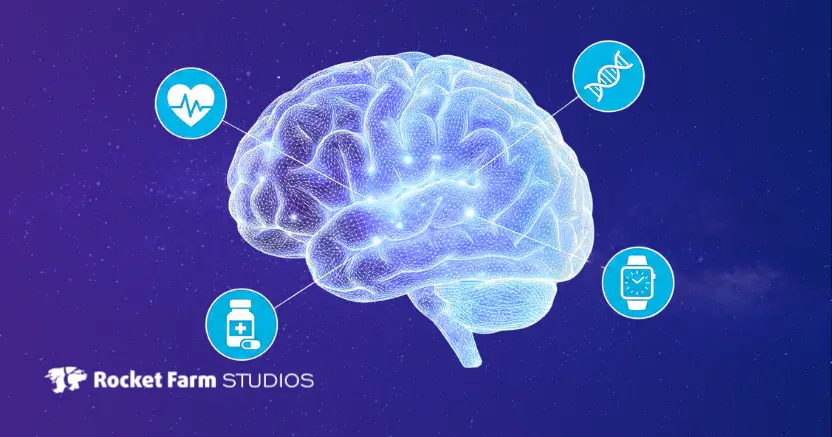
By connecting medical records, wearable data, and wellness apps, AI systems can begin to see patterns instead of isolated data points.
Sleep, activity, lab results, medications, and symptoms can be understood together rather than separately.
This shift enables something healthcare has long struggled to provide: a connected understanding.
Not just of care, but of the full picture over time.
It also begins to change the role AI plays.
Instead of acting like a search engine, it starts to function as a long-term companion that helps people track, interpret, and reflect on their health over time.
Trust, Privacy, and Responsibility Matter More Than Ever
Healthcare carries higher stakes, where privacy, security, and trust are not add-ons but core requirements.
As AI becomes more embedded in health workflows, the systems behind it must be designed with care.
Separation of data, clear boundaries around memory, and patient-centered safeguards are requirements.
Public scrutiny is increasing, as it should be.
At the same time, history makes one thing clear: when technology meaningfully improves people’s lives, it tends to be embraced.
The responsibility then shifts to builders to ensure those tools are safe, transparent, and worthy of that trust.
What This Means for AI Builders and Healthcare Teams
The lesson from this moment is not that AI is replacing doctors or reinventing healthcare overnight.
AI instead is becoming a connective layer in a system that desperately needs better coordination, visibility, and support.
For healthcare organizations, startups, and platforms, the opportunity lies in building systems that integrate smoothly into real workflows, respect constraints, and deliver clear value to patients and providers alike.
This requires thoughtful product design, careful orchestration, and an understanding of how people actually work and make decisions.
At Rocket Farm Studios, we work with teams building AI-powered products, especially in complex spaces like healthcare.
If you’re curious about how AI could genuinely help patients, clinicians, or healthcare teams, we’d love to have a conversation and explore what that could look like together.